Digitalization is fundamentally transforming the justice system. Paper files, manual procedures, and time-consuming administrative processes are increasingly reaching their limits in courts and judicial agencies. At the same time, demands for efficiency, data protection, and fast, secure communication are on the rise. This is exactly where eJustice comes in.
Justice & Administration | Topics & Trends
eJustice represents the digital transformation of the justice system and the associated procedural and administrative processes. The goal is to simplify workflows, avoid media discontinuities, and make information available more quickly. This benefits not only courts and judicial authorities, but also law firms, notary offices, government agencies, and other parties to proceedings who are involved in digital processes.
eJustice refers to the digitization of processes within the judicial system and the associated procedural workflows.
What does eJustice mean?
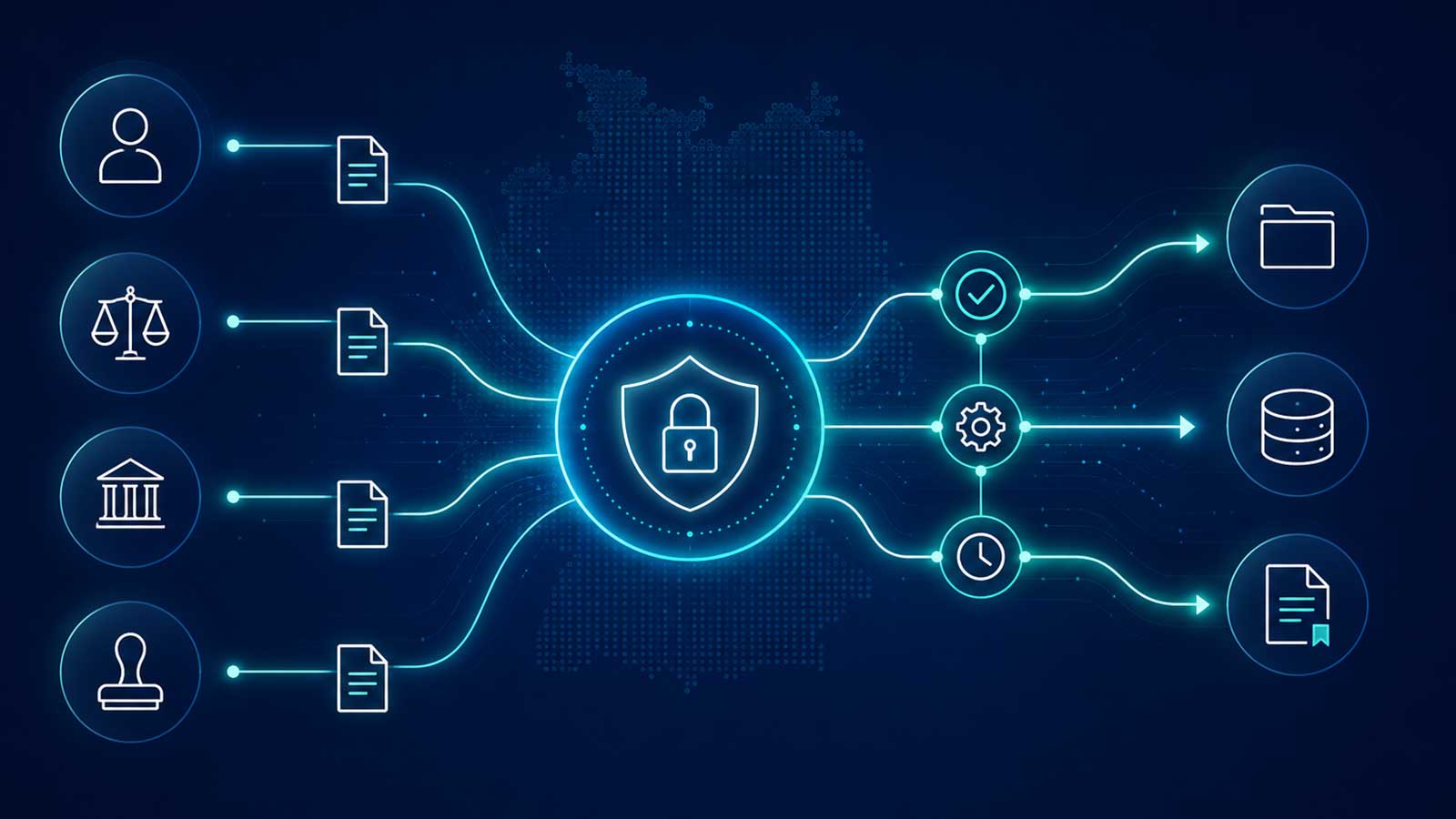
The term “eJustice” refers to the digitization of the justice system and the associated procedural processes. This includes, in particular:
- Electronic Records Management (E-File)
- Electronic Legal Transactions (ERV)
- electronic signatures
- digital archiving
- Document Management Systems
- Digital Access to Judicial and Administrative Services
The goal of eJustice is to replace paper-based and manual processes with efficient digital procedures. This results in shorter processing times, greater transparency in procedures, and more efficient collaboration among all parties involved.
This is particularly important in the judicial system. Legal proceedings often involve large volumes of sensitive documents, numerous parties, and complex processes. Without digital support, this can quickly lead to inconsistencies in data formats, delays, and high administrative costs.
Why is eJustice becoming increasingly important?
The demands placed on modern judicial systems are constantly increasing. Citizens, businesses, and institutions expect fast, transparent, and digital processes. At the same time, courts and government agencies must securely manage and process ever-increasing volumes of data.
In addition, there are other challenges:
- Skills shortage
- increasing number of cases
- extensive documentation requirements
- strict data protection requirements
- Requirements for Long-Term and Secure Archiving
In this environment, analog processes cause significant inefficiencies. Paper files must be transported, archived, and processed manually. Information is often stored in decentralized locations. Searching for documents takes up valuable time.
eJustice lays the foundation for modern work processes. Digital systems enable quick access to information, automated workflows, and significantly more efficient collaboration.
Specialized technology partners such as Westernacher Solutions GmbH, in particular, help organizations implement this transformation in a practical and secure manner.
An Overview of Key eJustice Processes
Numerous digital processes are already standard practice in modern legal work. Key components of eJustice include electronic case management (e-case), electronic legal communications (ERC), qualified electronic signatures, and modern document management and archiving systems.
Electronic legal communication enables the secure digital exchange of documents between courts and parties to proceedings. Systems such as the Special Electronic Attorney Mailbox (beA), the Special Government Agency Mailbox (beBPo), and the Special Notary Mailbox (beN) are used for this purpose.
These solutions streamline processes, reduce media breaks, and lay the foundation for secure, efficient, and legally compliant digital workflows.
eJustice: The Benefits of Digital Justice
The introduction of e-justice solutions brings numerous benefits.
Greater Efficiency
Digital processes significantly reduce the number of manual steps. Documents are available immediately and no longer need to be physically transported. Automated workflows save time and minimize sources of error.
This allows cases to be processed more quickly and resources to be allocated more effectively.
Greater Transparency
Digital files provide a better overview of ongoing proceedings and their current status. Information can be managed centrally and is easier to track. This improves collaboration among all parties involved.
Improved IT Security
Modern e-justice systems rely on high security standards. Access rights, encryption, and secure archiving procedures protect sensitive data from loss and unauthorized access.
This plays a crucial role for organizations in the legal field.
Sustainability
Going paperless not only reduces costs but also promotes more sustainable work practices. At the same time, it significantly reduces the effort required for storage and archiving.
The Electronic File as the Cornerstone of eJustice
A key component of eJustice is the electronic file (e-file). It replaces traditional paper files and digitally captures all the information related to a case.
These include, among other things:
- Legal Briefs
- Contracts
- Resolutions
- Correspondence
- Supporting documents
- Deadlines and Procedural Dates
Digital files provide fast, location-independent access to relevant information. At the same time, they enable structured search functions, improved traceability, and automated workflows.
However, the introduction of electronic records presents many organizations with technical and organizational challenges. Processes must be adapted, data protection requirements met, and existing systems integrated.
Westernacher Solutions GmbH provides support in this area with specialized digitization and software solutions for the judiciary and government agencies.
Digital Client Onboarding with Justin Legal
The digitization of legal workflows often begins even before court proceedings start. One example of this is the digital intake of clients at law firms.
Data is often entered multiple times, documents are processed manually, and information is transmitted in an unstructured manner. With Justin Legal, Westernacher Solutions offers a solution for digital case intake.
The software helps firms capture client information digitally in an efficient and structured manner. Information is processed centrally, and processes are automated. This results in faster workflows and significantly improved user-friendliness for clients and employees.
NOAH: Digital Processes in Notarial Practice
Notary offices, too, are increasingly facing the challenge of handling complex processes digitally and efficiently. At the same time, they must meet high standards for data protection, documentation, and legal certainty.
With NOAH, Westernacher Solutions provides notary software that supports digital processes in notary offices.
The software helps structure workflows, centrally manage documents, and streamline administrative processes. As a result, notary offices benefit from a modern and secure work environment.
Automated Archiving with FYDLOX
Digital archiving is one of the key components of modern judicial and administrative processes. Documents must be stored securely for the long term and archived in a way that allows them to be quickly located and traced.
Manual archiving processes often require a great deal of effort and increase the risk of errors or data loss.
With FYDLOX, Westernacher Solutions offers software for the automated archiving of messages from electronic legal communications (beA, beN).
The solution helps law firms and notary offices archive information efficiently and in a structured manner.
eJustice: Data Protection and IT Security
The digitization of legal processes places high demands on data protection and IT security. Courts, government agencies, and other parties to legal proceedings process highly sensitive information on a daily basis.
These include, for example:
- personal data
- confidential contracts
- Court documents
- financial information
- notarized documents
Secure systems therefore form the foundation of any e-justice strategy. In addition to technical safeguards, access rights, data backup, and transparent archiving processes also play an important role.
Challenges in Implementing eJustice
The digitization of the justice system requires more than just new software. Many organizations are facing complex transformation processes.
Common challenges include:
- Integration of Existing Systems
- Adjustment of Internal Processes
- Employee Training
- Compliance with Legal Requirements
- secure data migration
- Adoption of New Technologies
Successful e-justice projects therefore require a comprehensive strategy. Technology alone is not enough. What matters most are practical solutions that are tailored to actual workflows.
The Future of the Justice System with eJustice
The digitization of the justice system will continue to grow in importance in the coming years. Artificial intelligence, automated workflows, and intelligent document processing are creating new opportunities for more efficient processes.
At the same time, demands for flexibility, data protection, and digital services are on the rise. Organizations that invest in modern e-justice solutions early on will benefit in the long term from:
- faster processes
- lower administrative costs
- greater transparency
- improved data availability
- more efficient collaboration
Digital technologies do not replace employees’ legal expertise, but rather support them in their day-to-day work and reduce repetitive tasks.
With specialized solutions such as Justin Legal, NOAH, and FYDLOX, Westernacher Solutions GmbH supports organizations on their journey toward a modern, secure, and efficient digital way of working.
Conclusion
eJustice represents the digital future of the justice system. Electronic case files, electronic legal proceedings, automated processes, and secure archiving significantly improve the efficiency and transparency of legal procedures.
From the judiciary and government agencies to law firms and notary offices, numerous stakeholders benefit from faster processes, better collaboration, and a modern digital infrastructure.
However, successful implementation requires secure, user-friendly, and practical solutions. This is precisely what Westernacher Solutions GmbH specializes in as an experienced full-service IT provider for the judiciary, government agencies, and notary offices.
FAQ on eJustice
ALSO INTERESTING