Digital identities are a key component of the digital transformation of government, business, and society. In the European context in particular, the so-called EUDI Wallet (European Digital Identity Wallet) is becoming increasingly important. It is designed to enable citizens to manage and use their identity and official documents digitally, securely, and in a user-friendly manner.
Justice & Administration | Topics & Trends
Under the revised eIDAS Regulation (eIDAS 2.0), the EU requires all 27 member states to make this digital wallet available to their citizens by the end of 2026. In Germany, it is scheduled to be available on January 2, 2027. An official test environment has been running since the beginning of 2026. Westernacher Solutions is testing use cases under real-world conditions.
The Role of the EUDI Wallet in the Digital Identity Ecosystem
Essentially, the EUDI Wallet stores two types of digital credentials. The first is personal identification data (PID). This data represents a digital ID at the highest eIDAS assurance level (“high”) and is comparable to today’s national ID card.
In addition to the PID, so-called Electronic Attribute Attestations (EAA) can be stored in the wallet—digital certificates that are available either as simple EAAs or as qualified ones, in which case they are called Qualified Electronic Attribute Attestations (QEAA). The difference is legally significant: While a simple EAA represents, for example, a club membership or a loyalty card, the QEAA is additionally signed with a qualified electronic signature by a qualified Trust Service Provider (qTSP) subject to strict technical regulations.
Government-issued documents with special status
In addition to the electronic attributes already mentioned—which are referred to individually or collectively as “credentials”—there will be so-called Public QEAAs: qualified electronic attribute certificates issued by government agencies. These include documents such as driver’s licenses, police clearance certificates, residence certificates, or disability cards. One of the selected pilot projects involves the issuance of a digital caregiver ID in the EUDI Wallet (Federal Government and North Rhine-Westphalia). An overview of the 16 pilot projects currently underway can be found on the website of FITKO, a subsidiary organization of the IT Planning Council. These include additional projects in the areas of parental leave applications, building permits and preliminary building approvals, school certificates, and tax administration.
The special status of Public QEAAs stems from two factors: First, they are also qualified electronic signatures. At the same time, they are issued by authentic sources—primarily government registries—which further ensures their trustworthiness within the wallet ecosystem.
For the administration, this entails a dual role: it acts both as an issuer of Public QEAAs and as a relying party that accepts wallet certificates issued by others. In early 2026, the Federal Office for Information Security (BSI) published a set of guidelines that provides authorities in both roles with specific instructions on how to establish a secure connection to the EUDI ecosystem.
Ways to Access the Wallet: Three Integration Approaches
How do government-issued documents from the registries end up in the user’s wallet?
Currently, three different approaches are being discussed and, in some cases, have already been tested:
1. Delivery via the central citizen mailbox
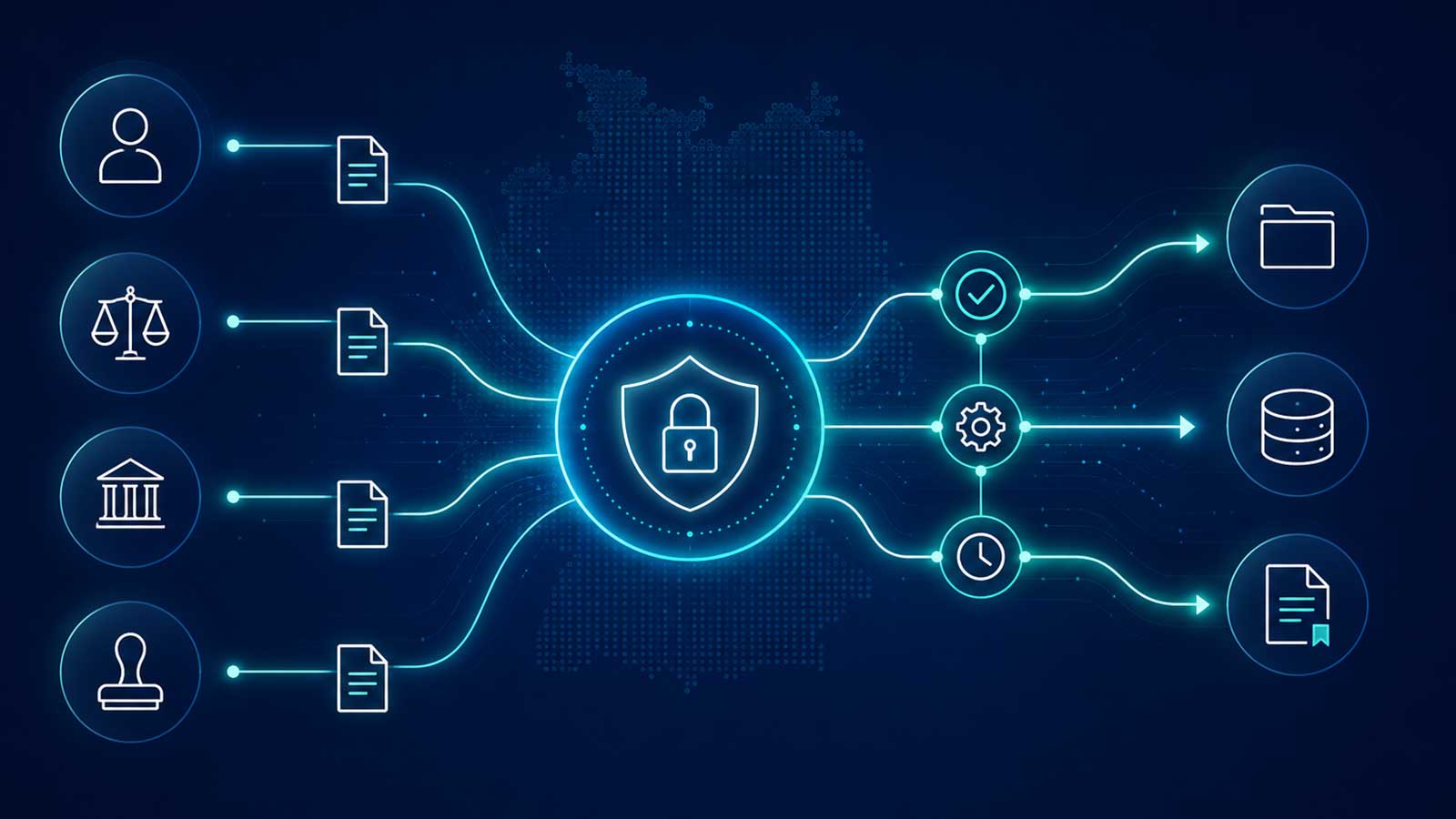
In this scenario, a government agency sends the notices it has generated to the central citizen mailbox. From there, citizens can transfer them to their wallet, for example, using a QR code or a deep link.
In the background, a central authority signs the notices with a qualified electronic signature, and an EUDI wallet adapter converts the documents into a standardized format that allows the required documentation to be imported into the wallet. This solution is expected to be implemented by mid-2026 but is considered a transitional scenario. It requires an export function in the central citizen mailbox as well as the available adapter.
2. Direct connection via NOOTS
The long-term goal is direct integration: government registries will make data available directly through NOOTS (National Once Only Technical System). It forms the basis for linking public registers, so that, on the one hand, data need only be provided once (in accordance with the “once-only” principle) by citizens or organizations, and, on the other hand, this data can also be exchanged between various government agencies.
Users identify themselves using their personal identification data (PID) and can then download the documents directly from the registries into their wallet. A central public authority communicates with NOOTS via a standardized interface, has the document electronically signed by a certification authority, and transfers it to the wallet.
This will require that the relevant registries be connected to NOOTS by the end of 2026 as part of the ongoing registry modernization effort. This model enables a particularly efficient and scalable provision of digital records and is currently the preferred approach at the federal level.
3. Government agencies as independent exhibitors
Another option is for individual government agencies to act as issuers of digital certificates themselves, provided they comply with eIDAS standards. This decentralized model is being tested in the Dresden pilot project, for example with the Dresden Pass and the Saxon Volunteer Card. This model allows for flexible implementation but places higher technical demands on individual agencies regarding interoperability and the qualified electronic signature of the credential.
Prioritizing use cases
Not all forms of identification are equally suitable for quick integration into the wallet. It makes sense to prioritize them step by step based on the following criteria:
- Frequency of use
- Legal Relevance
- Technical Feasibility
- Evidence from cases involving staffing shortages regarding processing times
- Possibilities for reusing digital records in other specialized procedures
Outlook: The Digital Government of the Future
The official launch date for the German government’s EUDI Wallet is January 2, 2027. The first version will be released as a free smartphone app and will initially include the PID function—that is, the digital ID. Additional forms of identification and use cases are expected to follow gradually.
The European Commission’s goal is for four-fifths of all EU citizens to be using the Wallet by 2030. Integration with government services is crucial to achieving this goal: The EUDI Wallet will only realize its full potential if citizens can load not only their personal information but also government-issued documents directly into the Wallet and use them for both private and public services.
Given the now tight timeline, after all, the project is set to launch in six months, not only the process of naming the German EUDI wallet but also, in particular, the national legal framework to be established by the Digital Identities Act (DIdG) must be pushed forward at full speed.
Westernacher Solutions, along with approximately 120 other companies, is a signatory to the Memorandum of Understanding on the successful rollout of the EUDI Wallet, which was published by the digital industry association Bitkom in collaboration with the Federal Ministry for Digital and State Modernization (BMDS).
FAQ


ALSO INTERESTING