Artificial intelligence | Topics & Trends
Why do we need synthetic data?
Synthetic data is artificially generated data that reproduces typical characteristics of real data without adopting real cases one-to-one. Their value lies above all where original data cannot or may not be used freely.
This is particularly relevant for the administration and judiciary: Anyone who wants to try out initial digital solutions, test procedures or process internal documents automatically needs a data protection-compliant basis. Synthetic data can help to develop prototypes, test processes and get started with AI applications – without immediately working with highly sensitive real data.

Synthetic data: not automatically secure
What are the problems with creating synthetic data?
The term sounds reassuring at first: artificially generated, i.e. secure. In practice, however, the creation is challenging. If synthetic data remains too close to real data, there is a risk that individual pieces of information may be recognized indirectly. If, on the other hand, they are too far removed from reality, they lose their practical usefulness. There is also another problem: errors, distortions or unbalanced patterns can be carried over or even amplified when the data is generated. The result is a formally new data set, but not a reliable basis for sound digital decisions.
What does this have to do with security?
In this context, security means more than just data protection. It is also about traceability, reliability and legally compliant use. Synthetic data must be generated in such a way that it does not allow any conclusions to be drawn about real people and at the same time remains technically plausible. This requires clear procedures, checks and documented quality criteria. Under the GDPR, it is also crucial to ensure that re-identification is no longer possible. Technical guidelines on anonymization and current classifications in data protection clearly show that “synthetic” is not an automatic release. Security is only created by a controlled process, not by the keyword alone.
Why is this important for Westernacher Solutions?
Westernacher Solutions is driving digital progress: with secure IT solutions for justice and administration, we design efficient processes and create the basis for a sustainable democracy. This is precisely why we do not see synthetic data as a shortcut, but as part of a responsible digital strategy. Anyone modernizing public IT must not only think about innovation, but always also about protection interests, traceability and long-term sustainability. It is precisely this combination of technological progress and public responsibility that is crucial for us.
Where does Westernacher Solutions use synthetic data?
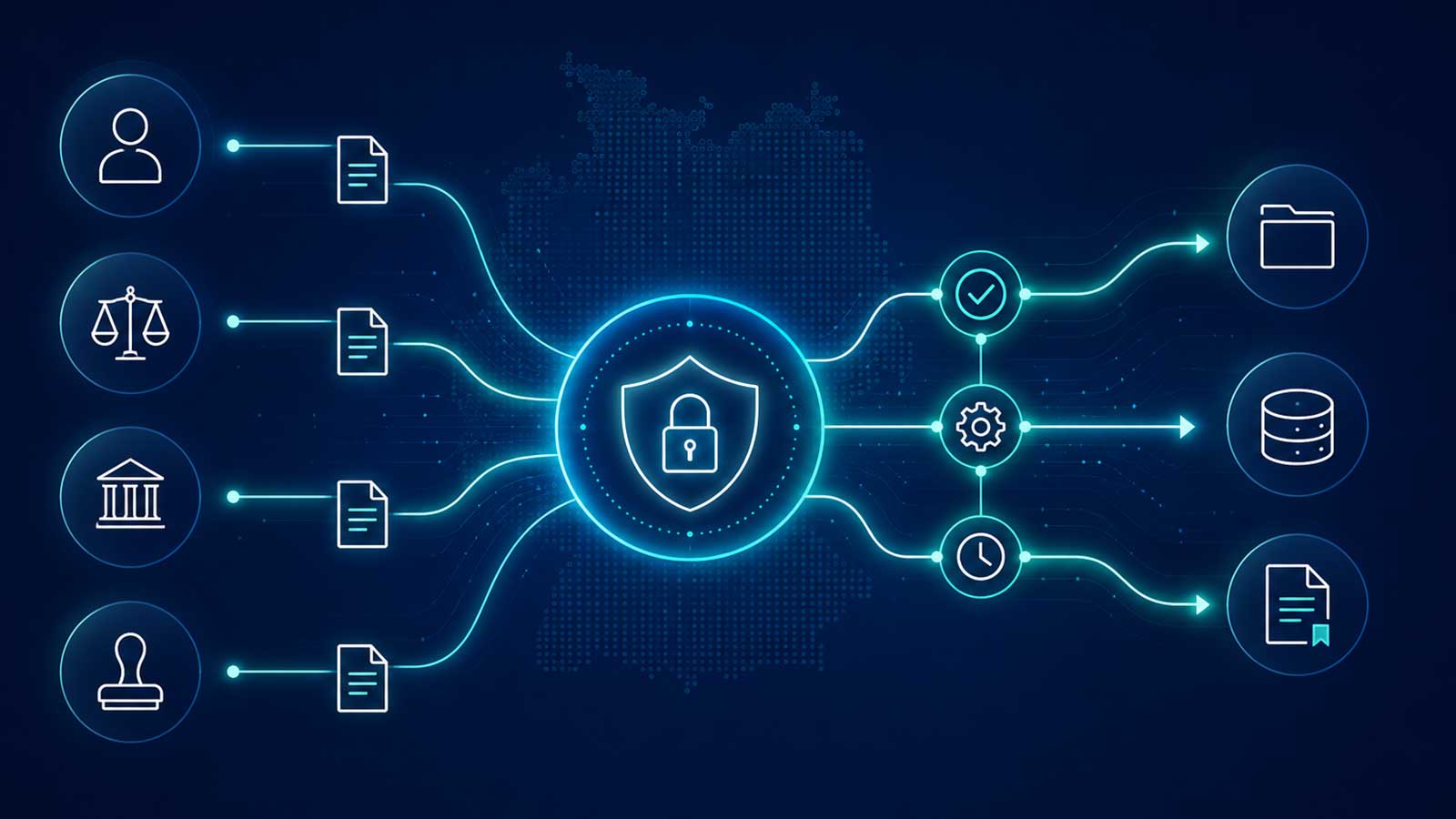
We use this opportunity to create documents anonymously and securely, which we can then use to build and test initial AI solutions for customers: in compliance with data protection regulations and the GDPR.
Westernacher Solutions uses synthetically generated PDF documents to develop and test the AI-based solution “STAN“. STAN can extract information (names, addresses, procedural data, file numbers, etc.) from subject-specific PDF documents, which form the basis for digital administration and file systems.
Conclusion
Synthetic data can be an important building block for secure and future-proof AI projects in administration and justice. However, they do not automatically solve the central issues of data protection, quality and security. The decisive factor is how they are generated, checked and used. Our customers should therefore not only pay attention to a balanced data basis, but above all to a secure and reliable one. This is exactly where the expertise of Westernacher Solutions comes in: We combine technical understanding with the aspiration to design digital solutions that are legally compliant, comprehensible and sustainable in the long term. Synthetic data is not a shortcut, but part of a well-thought-out digital strategy.

Your contact person
Shiva Banasaz Nouri
AI Competence Center
ALSO INTERESTING